BAS Motor transport management
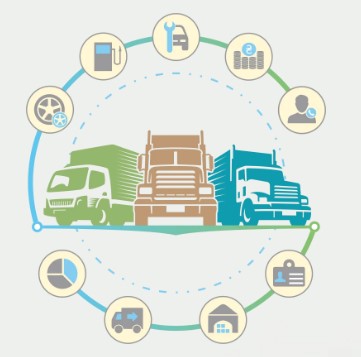
“BAS Transport Management” is designed to automate management and operational accounting in transport companies and organizations.
The system is also effectively used in the transport departments of trading, manufacturing, and other companies that operate vehicles for their own needs.
This solution helps optimize fleet management, control costs, plan and analyze transport usage, and increase the efficiency of transport departments.
Key features of “BAS Transport Management”
Order Management and Dispatching
This functional block covers the key processes of operational activity:
- systematization and distribution of requests among fleet units;
- administration of daily assignments;
- processing of route sheets.
The "BAS Transport Management Standard" software offers ergonomic tools for order management. The system allows processing transportation requests from both external customers and internal structural units of the enterprise.
Critical parameters are recorded in each vehicle request:
- precise coordinates and delivery time slots;
- physical properties and cargo specifications;
- additional services provided during transportation;
- technical criteria that the vehicle must meet.
The solution automates the creation of daily assignments, taking into account individual driver schedules and specific vehicle operating modes.
Dispatcher's AWS (Automated Workstation)
Dispatcher's AWS is a central hub for prompt processing of customer orders and building transportation plans.
Key functionality includes:
- Operational Selection: quick search and filtering of required orders.
- Logistics Documentation: automated filling and generation of "Route Sheets".
- Centralized Monitoring: working with registers (logs) of route and waybills.
- Operations Scaling: batch generation and mass printing of vehicle release assignments.
Settlements with Counterparties
The system provides a full cycle of financial support for logistics operations:
-
administration of price lists and tariff grids for transportation services;
-
automated calculation of service costs;
-
generation of invoices, certificates of completion, sales documents, and detailed registers.
administration of price lists and tariff grids for transportation services;
automated calculation of service costs;
generation of invoices, certificates of completion, sales documents, and detailed registers.
The key advantage of the solution is the intelligent tariff directory. It allows for the development of multi-level pricing schemes and flexible adaptation to specific partners, individual contracts, specific routes, or vehicle types.
Functional Capabilities of the Block:
-
Price Differentiation: establishing a direct dependence of the tariff on the volume of work actually performed.
-
Fixed Rates: using constant prices for standard services.
-
Complex Algorithms: constructing combined tariff plans.
Price Differentiation: establishing a direct dependence of the tariff on the volume of work actually performed.
Fixed Rates: using constant prices for standard services.
Complex Algorithms: constructing combined tariff plans.
Service cost calculation occurs automatically based on current tariffs in the "Consignment Note" (TTN) document, which can be issued directly within the waybill interface.
For any reporting period, the user can generate invoices and certificates for customers with the required level of detail. In addition to standard documents, the system allows for the preparation of service registers for reconciliation.
To ensure accounting integrity, a mechanism for exporting sales documents to the "BAS Accounting" program has been implemented.
Income and Expense Accounting
The system allows for solving the following analytical tasks:
-
recording direct operating expenses for maintaining one's own fleet;
-
adaptive configuration of criteria for the distribution of profits and expenses;
-
monitoring additional costs associated with vehicle operation.
recording direct operating expenses for maintaining one's own fleet;
adaptive configuration of criteria for the distribution of profits and expenses;
monitoring additional costs associated with vehicle operation.
Direct expenses are automatically calculated based on data from waybills and repair sheets. These include: fuel costs (POL), maintenance and repair costs, depreciation charges, as well as tire wear.
For each category of income, expense, or cost item, it is possible to individually configure the base and allocation methods between analytical objects.
Analytical reporting on expenses is generated in various dimensions, including:
-
by specific transport orders;
-
by individual vehicles or departments;
-
by counterparties (customers).
by specific transport orders;
by individual vehicles or departments;
by counterparties (customers).
The final data analysis allows for an objective assessment of the profitability of vehicle operation and the overall efficiency of the entire logistics department.
Fleet Management
The system ensures the fulfillment of the following key tasks:
-
administration of a detailed vehicle registry;
-
monitoring of vehicle and driver documents with validity date control;
-
recording actual production/output of vehicles and installed equipment.
administration of a detailed vehicle registry;
monitoring of vehicle and driver documents with validity date control;
recording actual production/output of vehicles and installed equipment.
Centralized data collection is carried out in the "Vehicles and Equipment" directory. It stores all technical and operational characteristics of each fleet unit.
Planned Maintenance (MOT/Service) parameters are set individually for each model. The system allows for flexible programming of service intervals based on:
-
production metrics (mileage, engine hours worked, number of operations, etc.);
-
calendar periods.
production metrics (mileage, engine hours worked, number of operations, etc.);
calendar periods.
When service time arrives, the vehicle is automatically displayed in the "Maintenance Due Date Control" report and is marked with a corresponding icon in the general list.
Additional block features include:
-
System oversight of expiration dates for licenses, insurance policies, permits, and other papers.
-
Function for uploading and storing digital scan copies directly in the object's card.
System oversight of expiration dates for licenses, insurance policies, permits, and other papers.
Function for uploading and storing digital scan copies directly in the object's card.
If the validity period of any document is coming to an end, the program visually signals this with a special icon in the vehicle list. A complete picture of documents requiring renewal can be viewed in a specialized report. After the expiration date, data is automatically archived.
Waybill Accounting
The system supports the issuance and processing of various types of waybill documentation, particularly for:
-
passenger and freight transport (with piece-rate or hourly pay);
-
specialized machinery and construction vehicles (work report);
-
buses and cars on intercity routes;
-
transport used by individual entrepreneurs (FOP).
passenger and freight transport (with piece-rate or hourly pay);
specialized machinery and construction vehicles (work report);
buses and cars on intercity routes;
transport used by individual entrepreneurs (FOP).
All document templates comply with unified printed forms. The creation process is available both in manual mode and through the automatic batch issuance function. The latter option is optimal for companies with large-scale fleets, as it allows the dispatcher to mass-generate and print documents with minimal time expenditure.
During waybill processing, the program automatically calculates:
-
Production/Output: distance with cargo, duration of duty, actual work and downtime, etc.
-
Resources: standard and actual consumption of fuel (POL) and technical fluids for each piece of equipment.
Production/Output: distance with cargo, duration of duty, actual work and downtime, etc.
Resources: standard and actual consumption of fuel (POL) and technical fluids for each piece of equipment.
Based on the entered data, extensive analytical reporting is formed:
-
equipment operation report (in engine hours);
-
detailed work card and vehicle mileage data;
-
vehicle production statistics;
-
Vehicle Status Chart (visualization of fleet occupancy in Gantt chart format).
equipment operation report (in engine hours);
detailed work card and vehicle mileage data;
vehicle production statistics;
Vehicle Status Chart (visualization of fleet occupancy in Gantt chart format).
This approach ensures full control over vehicle operation and accuracy in calculations with personnel and suppliers.
Accounting for Fuel, Lubricants, and Technical Fluids
The program's functionality is aimed at solving the following key tasks:
-
monitoring the turnover and consumption of fuel and technical fluids individually for each transport unit;
-
recording cases of fuel economy or excessive consumption by drivers during trips;
-
inventory and control of actual residues of fuel and lubricants in vehicle tanks.
monitoring the turnover and consumption of fuel and technical fluids individually for each transport unit;
recording cases of fuel economy or excessive consumption by drivers during trips;
inventory and control of actual residues of fuel and lubricants in vehicle tanks.
Calculation of Standard and Actual Consumption
For each vehicle, you can set both base fuel consumption limits and specific norms for performing special tasks. The system supports working with correction factors that take into account:
-
difficult operating conditions;
-
temperature conditions and seasonal surcharges.
difficult operating conditions;
temperature conditions and seasonal surcharges.
The methodology for calculating standard consumption fully complies with the current orders of the Ministry of Transport of Ukraine, ensuring the legal correctness of accounting.
Fueling and Fuel Drains
The program provides extensive opportunities for resource control:
-
Monitoring Unauthorized Actions: recording and accounting for facts of fuel draining.
-
Inventory: regular reconciliation of actual residues in fuel tanks.
-
Variety of Fueling Methods: accounting for fuel received from the warehouse, purchased for cash, with coupons, via direct deliveries, or through fuel cards.
-
Data Automation: importing reports from processing centers for detailing operations by plastic cards.
-
Verification: comparative check of downloaded data from suppliers against actual receipts provided by drivers.
Monitoring Unauthorized Actions: recording and accounting for facts of fuel draining.
Inventory: regular reconciliation of actual residues in fuel tanks.
Variety of Fueling Methods: accounting for fuel received from the warehouse, purchased for cash, with coupons, via direct deliveries, or through fuel cards.
Data Automation: importing reports from processing centers for detailing operations by plastic cards.
Verification: comparative check of downloaded data from suppliers against actual receipts provided by drivers.
Analytical Reporting
Comprehensive information on the movement of fuel and technical fluids can be obtained using specialized reports:
-
Statement of movement and receipt-consumption of fuel and lubricants on vehicles.
-
Detailed fueling registers.
-
Report on the comparison of fueling data via fuel cards.
Statement of movement and receipt-consumption of fuel and lubricants on vehicles.
Detailed fueling registers.
Report on the comparison of fueling data via fuel cards.
Accounting for Repairs and Aggregates
The system ensures full control over the technical condition of the fleet through the following capabilities:
-
registration and processing of repair requests;
-
maintenance planning and recording of completed repairs both in in-house workshops and third-party service centers;
-
generation of the "Requirement-Invoice" printed form directly from the repair sheet;
-
systematic accounting of aggregates, spare parts, and additional equipment;
-
monitoring the installation and replacement of tires, batteries, and other components.
registration and processing of repair requests;
maintenance planning and recording of completed repairs both in in-house workshops and third-party service centers;
generation of the "Requirement-Invoice" printed form directly from the repair sheet;
systematic accounting of aggregates, spare parts, and additional equipment;
monitoring the installation and replacement of tires, batteries, and other components.
The program allows for a deep analysis of service history and future routine maintenance using the "Maintenance Planning" and "Maintenance Schedule" reports. To optimize costs, tools are provided for analyzing used spare parts and materials, as well as the ability to rank vehicles by their maintenance costs.
Work with Aggregates and Configuration
The subsystem is designed for detailed accounting of tires, batteries, and auxiliary equipment (radios, first aid kits, etc.). Accounting is kept individually for each vehicle, and for tires, specific installation positions are additionally recorded.
For maximum convenience for the mechanic, a "Tire Installation Wizard" has been implemented in the system. Using visual vehicle layouts, the specialist can:
-
quickly perform mounting, dismounting, or tire rotation operations;
-
instantly receive information about the current state of tires on the axles.
quickly perform mounting, dismounting, or tire rotation operations;
instantly receive information about the current state of tires on the axles.
The system automatically records the date and location of each unit's installation. Based on actual mileage data, the program calculates current tire wear, allowing for early procurement planning and forecasting replacement dates.
Accounting for Traffic Accidents and Driver Fines
The system includes a full-featured block for recording and analyzing road traffic accidents (RTAs), which includes:
-
documentation and accounting of road incidents;
-
recording data on technical vehicle damage and received insurance compensations;
-
systematization of accident causes and types of traffic rule violations;
-
formation of an anti-rating of violating drivers.
documentation and accounting of road incidents;
recording data on technical vehicle damage and received insurance compensations;
systematization of accident causes and types of traffic rule violations;
formation of an anti-rating of violating drivers.
Through analytical reports, management can investigate accident factors and the frequency of specific drivers being involved in accidents. Comparison of amounts paid by insurance companies with the actual costs incurred by the enterprise for vehicle restoration is also available.
A separate functional area is dedicated to fines management. The system allows:
-
automated generation and printing of driver consent statements for fine deductions from income;
-
storage of digital photo evidence of violations;
-
analysis of the structure of traffic violations by category;
-
keeping records of payment discipline (monitoring fine payment status).
automated generation and printing of driver consent statements for fine deductions from income;
storage of digital photo evidence of violations;
analysis of the structure of traffic violations by category;
keeping records of payment discipline (monitoring fine payment status).
In specialized document cards, data regarding the vehicle, the offender, the circumstances of the case, and the financial parameters of the penalty are recorded. Consolidated reporting provides detailed statistics on driver discipline and identifies the highest-risk employees.
Inventory Accounting for Spare Parts and Consumables
The system ensures full control over the movement of material assets through the following functional capabilities:
-
recording the receipt and disposal of spare parts, fuel, lubricants, and technical fluids at warehouses;
-
administration of the issuance of spare parts and materials for production needs;
-
management of internal logistics (movement of inventory items between different warehouse locations);
-
targeted write-off of inventory items to a specific vehicle;
-
conducting planned and unscheduled inventories;
-
real-time monitoring of current stock levels.
recording the receipt and disposal of spare parts, fuel, lubricants, and technical fluids at warehouses;
administration of the issuance of spare parts and materials for production needs;
management of internal logistics (movement of inventory items between different warehouse locations);
targeted write-off of inventory items to a specific vehicle;
conducting planned and unscheduled inventories;
real-time monitoring of current stock levels.
For an in-depth evaluation of warehouse activities, a wide range of analytical reports is provided, allowing for a detailed study of product movement dynamics and verification of current balances at the enterprise's warehouses.
Driver Performance Accounting
The system provides automation for key fleet personnel management processes:
-
monitoring actual output and analyzing the use of working time;
-
calculation of driver remuneration based on data from waybill documentation.
monitoring actual output and analyzing the use of working time;
calculation of driver remuneration based on data from waybill documentation.
Functional capabilities of the block allow:
-
developing, storing, and printing personal driver work schedules for any time period (from a month to a year);
-
automatically generating time sheets based on actual data.
developing, storing, and printing personal driver work schedules for any time period (from a month to a year);
automatically generating time sheets based on actual data.
Financial information regarding accrued payments is accumulated in the "Payroll Calculation" document. This data serves as the basis for tax calculations and the preparation of internal reports.
To complete the accounting cycle, a data export feature to the "BAS Accounting" program is provided, which prevents information duplication in the accounting circuit.
Software products for motor transport management