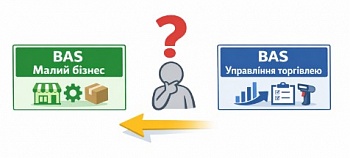
BAS Integrated enterprise management
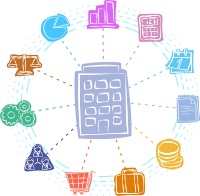
The product "BAS Comprehensive Enterprise Management" is a complex solution that covers the main management and accounting circuits, allowing for the organization of a unified information system to manage various aspects of small and medium-sized business activities.
Features and Functional Capabilities
-
Operations Management;
-
Planning System;
-
Financial Management in BAS CEM;
-
Budgeting;
-
Financial Result Determination and Directional Management;
-
Treasury and Settlement Management;
-
Monitoring and Analysis of Enterprise Performance Indicators;
-
Regulated Accounting;
-
HR Management and Payroll in BAS CEM;
-
Production Management;
-
Cost Management and Costing;
-
Sales Management;
-
Customer Relationship Management (CRM);
-
Procurement Management;
-
Warehouse and Inventory Management;
-
Technological Advantages and Administration.
The "BAS Comprehensive Enterprise Management" program is suitable for use in small, medium, or large businesses. It is designed for the automation and administration of various aspects of enterprise operations. Implementation of such a system is possible in companies involved in trade or, for example, the production of building materials.
Once in operation, the software product will significantly facilitate enterprise management. With its help, you can automate almost all areas of the enterprise's activities, including:
- allocation of funds and analysis of financial results;
- cost control and budget planning;
- human resource management;
- calculation of the cost of finished products;
- sales management and tracking of inventory balances;
- monitoring the fulfillment of customer orders.
Also, with the help of the software product, automation of business activity accounting, generation of journal entries, and internal document flow is carried out.
The IT system is developed based on the Business Automation Framework. The enterprise automation program has several advantages. These include high performance, an intuitive interface, and wide functional capabilities of the system.
Operations Management
The system contains a set of ready-made automated workstations (AWS) for specialists and line managers. Optimized interfaces simplify the performance of daily tasks and increase the speed of staff work.
Key Advantages:
-
High Performance: Subsystems are adapted to large volumes of document flow without loss of speed.
-
Data Accuracy: Generation of detailed and reliable information for the financial circuit and management analysis.
-
Convenience: Personalization of the workspace for specific user roles.
High Performance: Subsystems are adapted to large volumes of document flow without loss of speed.
Data Accuracy: Generation of detailed and reliable information for the financial circuit and management analysis.
Convenience: Personalization of the workspace for specific user roles.
Planning System
The subsystem synchronizes the work of departments to create sales, purchase, assembly, and payment plans. It is an effective tool for resource optimization and accurate forecasting of warehouse balances.
Key Capabilities:
-
Flexible Models: Support for "pull" (from sales), "push" (from purchases), and mixed strategies.
-
Scenario Planning: Creation of alternative plans, with the ability to replace ("rolling") or supplement ("summarizing") indicators.
-
Detailing and Decomposition: Automatic breakdown of aggregated plans into smaller periods (e.g., month into weeks).
-
Data Integration: Utilization of internal system statistics or data import from Excel.
-
Link to Orders: Separate planning for specific customer needs to monitor their fulfillment.
-
Analytics and Control: Comprehensive plan-fact analysis by nomenclature, warehouses, managers, and budget items.
Flexible Models: Support for "pull" (from sales), "push" (from purchases), and mixed strategies.
Scenario Planning: Creation of alternative plans, with the ability to replace ("rolling") or supplement ("summarizing") indicators.
Detailing and Decomposition: Automatic breakdown of aggregated plans into smaller periods (e.g., month into weeks).
Data Integration: Utilization of internal system statistics or data import from Excel.
Link to Orders: Separate planning for specific customer needs to monitor their fulfillment.
Analytics and Control: Comprehensive plan-fact analysis by nomenclature, warehouses, managers, and budget items.
Generated plans are automatically translated into the "Budgeting" subsystem, ensuring the unity of the financial and operational circuits.
Financial Management in BAS CEM
The subsystem is designed to manage all of the company's funds (cash and non-cash).
The product implements the functionality of payment requests and monitors the execution of payments according to these requests.
Functionality for accounting for bank settlements on acquiring operations has been developed.
The module provides the ability to monitor the company's financial results, its profits, and losses. Accounting is conducted based on the enterprise's areas of activity. For example, by assortment or by points of sale.
These tools allow for analyzing the company's effectiveness, optimizing it, and developing the business in the right direction.
Main Innovations of the Solution:
- Accounting for credits, deposits, and loans.
- Acquiring (payment cards).
- Flexible tools for maintaining a payment calendar.
- Approval routes for payment requests.
- Flexible tools for generating payment documents for future dates.
- Inventory of cash registers and bank accounts.
- Analytical reporting on cash flow.
Budgeting in BAS CEM
Comprehensive business management involves the automation of all business processes, including budgeting. The software product on the BAS platform provides a separate module for this purpose. It allows for easy customization of the budget structure and the ability to drill down into source data. Up to 6 analysis options are provided for each budget item in the module.
The product implements various tools for automatic cost calculation and extensive budget configuration capabilities.
Main Innovations of the BAS CEM Solution:
- Configurable budget types and extended analytics.
- Scenario modeling.
- Multi-currency support.
- Table-based input and adjustment forms.
- Economic forecasting.
- Analysis of planned indicator achievement.
- Extended financial analysis.
Financial Result Determination and Directional Management
The system allows for the analysis of enterprise profitability not only as a whole, but also by individual types of activities: operating, investing, and financial.
Key Capabilities:
-
Flexible Segmentation: Areas of activity can correspond to points of sale, projects, product groups, or regions.
-
End-to-End Analysis: The "Area of Activity" dimension is integrated into the chart of accounts, allowing for the separation of income and expenses in both management and regulated accounting.
-
Arbitrary Allocation Rules: Ability to set up custom algorithms for allocating cost of goods sold and revenue based on sales analytics.
-
Separate Accounting: The system allows for calculating the cost of production separately and tracking cash flow for each specific area.
-
Comprehensive Planning: Inclusion of areas of activity in material and financial planning processes.
Flexible Segmentation: Areas of activity can correspond to points of sale, projects, product groups, or regions.
End-to-End Analysis: The "Area of Activity" dimension is integrated into the chart of accounts, allowing for the separation of income and expenses in both management and regulated accounting.
Arbitrary Allocation Rules: Ability to set up custom algorithms for allocating cost of goods sold and revenue based on sales analytics.
Separate Accounting: The system allows for calculating the cost of production separately and tracking cash flow for each specific area.
Comprehensive Planning: Inclusion of areas of activity in material and financial planning processes.
The enterprise gains a tool for detailed evaluation of the effectiveness of each business unit, which allows for optimizing the structure of operations and developing the most profitable areas.
Treasury and Settlement Management
The subsystem ensures full control over financial flows, allowing for the avoidance of cash gaps and the maintenance of high payment discipline.
Key Capabilities:
-
Interactive Payment Calendar: A unified workplace for planning receipts and expenditures, reserving money for payment requests, and operatively distributing payments between accounts and cash registers.
-
Request Management: Flexible approval routes for payments and control of limits by cash flow items.
-
Efficient Bank Interaction: Separate registration of operational payments and statements increases the speed of settlement accounting without distorting account balances.
-
Acquiring Accounting: A full cycle of tracking card operations — from payment authorization to the crediting of funds by the bank, taking commissions into account.
-
Flexible Settlements: Separate accounting by partners (management) and counterparties (legal). Ability to conduct settlements by contracts, orders, or specific invoices.
- VAT Mechanisms: Support for Online (instant advance calculation) and Offline (scheduled calculation for high performance) modes.
Interactive Payment Calendar: A unified workplace for planning receipts and expenditures, reserving money for payment requests, and operatively distributing payments between accounts and cash registers.
Request Management: Flexible approval routes for payments and control of limits by cash flow items.
Efficient Bank Interaction: Separate registration of operational payments and statements increases the speed of settlement accounting without distorting account balances.
Acquiring Accounting: A full cycle of tracking card operations — from payment authorization to the crediting of funds by the bank, taking commissions into account.
Flexible Settlements: Separate accounting by partners (management) and counterparties (legal). Ability to conduct settlements by contracts, orders, or specific invoices.
Monitoring and Analysis of Enterprise Performance Indicators
BAS CEM implements capabilities for building a hierarchical model of goals and targets, including tools for their monitoring.
Main Innovations of the Solution:
- Construction of a hierarchical model of goals and targets.
- Creation of different variants of indicators with the ability to compare them.
- Monitoring of targets with drill-downs to source data.
- Extended analysis of financial results by areas of activity.
- A variety of graphical forms for analytical reports.
Regulated Accounting
The product contains all the necessary tools for the complete automation of tax and accounting. It includes the preparation of mandatory reports (a standard set is implemented).
This subsystem makes it possible to process data on accounting entries, account turnovers, and stock surpluses.
Main Innovations of the BAS CEM Solution:
- Configuring rules for recording business operations for financial accounting groups.
- Accounting for business events via deferred posting with control of the relevance of the records.
- Operational control of entry generation for any document.
- Automatic generation of outgoing tax invoices and their annexes based on the nomenclature composition of shipment documents.
- Control of the completeness and correctness of registration of incoming tax documents down to the VAT rate and the tax purpose of the acquisition.
HR Management and Payroll in BAS CEM
The subsystem is designed for organizing the work of company departments involved in human resource management, as well as for the comprehensive automation of processes that support the enterprise's HR policy, taking into account all requirements of current legislation. To solve tasks in this area, users are provided with the following capabilities:
- working with personal employee data;
- accounting for personnel movement and staffing, including obtaining unified reporting forms and internal analytical reports;
- organizing work with the staffing table;
- working with service contracts;
- tracking hours worked using various accounting methods;
- calculating personnel payroll using different wage systems: hourly (including tariff-based), piecework, and their variations;
- using performance indicators of the organization and specific employees when calculating labor remuneration;
- calculating payroll deductions, including those under enforcement documents;
- accruing other income not related to wages and income in-kind;
- conducting settlements with personnel in cash and non-cash form, managing employee-related debts;
- analyzing accrued wages using internal analytical reports;
- obtaining unified reporting forms;
- calculating taxes and contributions to the wage fund as regulated by legislation;
- generating regulated payroll reporting, both consolidated and personalized.
Main Innovations of the Solution:
- Analysis of HR management efficiency.
- Payroll calculation based on employee output data.
- Complex personnel settlements.
- Flexible options for reflecting payroll in financial and regulated accounting.
- Possibility to input an unlimited number of indicators and custom formulas.
- Analysis of the wage fund.
- Calculation and accrual of vacation reserves.
- Development of regulated payroll calculation capabilities.
Production Management
This subsystem simplifies the management of the production process significantly. The module allows for the creation of production plans with a chosen scenario, as well as:
- forming requests for the purchase of materials;
- controlling their transfer into production;
- accounting for the volume of finished products.
With the help of this module, the demand for resources (material and labor) is calculated. This information is used when forming the cost of the finished product.
Cost Management and Costing
The program includes functionality for controlling material flows. Using this module, all actual costs of the enterprise are accounted for, and expenses are calculated across all areas of activity.
The Cost Management Subsystem provides:
- accounting for actual enterprise costs by activity type in necessary dimensions in physical and monetary terms;
- operational quantitative accounting of resources in work-in-progress;
- accounting for actual work-in-progress balances at the end of the reporting period in necessary dimensions;
- various methods for allocating costs to the cost of production and performed works, to production overheads, areas of activity, and future period expenses;
- calculation of actual production cost for the period;
- provision of data on the structure of production costs.
The calculated cost can be detailed down to the volume of initial expenses, regardless of the number of production stages. This analysis significantly increases the transparency and control of the validity of the performed cost calculation.
Main Innovations of BAS CEM:
- Separate cost accounting by activity type.
- Isolated cost accounting by orders.
- Allocation of costs by areas of activity.
- Provision of data on production cost structure down to primary expenses.
- Improved month-end closing wizard.
Sales Management in BAS CEM
The module allows for organizing a "sales funnel" and automating the deal-closing process. Functionality is implemented for creating price lists, commercial offers, and payment schedules for orders. The possibility of estimating sales forecasts and a number of other functions is also provided.
Main Innovations of the Solution:
- Managing the efficiency of sales processes and customer deals.
- Sales funnel.
- Creating price lists with information on product balances.
- Using regulated sales processes, business processes for managing complex sales.
- Extended management of customer orders, standard and individual sales rules, agreements.
- Customer self-service.
- Managing trade representatives.
- Monitoring the status of sales processes.
- Planning the use of motor transport.
- Probabilistic assessment of sales forecasts.
- Separate accounting by partners (management accounting) and counterparties (regulated accounting).
- Automatic control of debt limits.
- Inventory of settlements.
- Monitoring and classification of overdue debt by a set of parameters.
- Extended tools for generating statistical and analytical reporting on the status of settlements.
Customer Relationship Management (CRM)
The subsystem facilitates work with customers and allows for forming an optimal strategy for cooperation with partners. Using the module, one can maintain a customer card, monitor all completed deals, and create loyalty cards.
There is also an option for comparative analysis of the performance indicators of different managers.
Main Innovations of the Solution:
- Forming a partnership strategy.
- Business processes for organizing customer interaction.
- Customer/partner dossier.
- Loyalty cards, customer loyalty analysis.
- Claim management.
- Monitoring deal fulfillment.
- BCG analysis.
- Extended analysis of manager performance indicators.
Procurement Management
BAS CEM provides supply managers with the information necessary for timely decision-making regarding the replenishment of inventories (TMC), reducing procurement costs, and organizing clear interaction with suppliers.
The subsystem functionality includes:
- operational procurement planning based on sales plans, production plans, and outstanding customer orders;
- creating orders for suppliers and controlling their fulfillment;
- registering and analyzing the fulfillment of additional conditions in contracts with fixed nomenclature items, volumes, and delivery terms;
- supporting various schemes for receiving goods from suppliers, including consignment;
- processing uninvoiced deliveries using warehouse orders;
- analyzing warehouse and production needs for goods, finished products, and materials;
- end-to-end analysis and establishing relationships between customer orders and supplier orders;
- analyzing the consequences of supplier order non-fulfillment (e.g., which customer order might be disrupted due to non-delivery of goods or materials);
- procurement planning taking into account projected inventory levels and reserved stock in warehouses;
- selecting optimal product suppliers based on reliability, delivery history, urgency criteria, proposed delivery terms, territorial or other arbitrary attributes, and automatic order generation;
- compiling delivery schedules and payment schedules.
Main Innovations of the Solution:
- Management of procurement activities.
- Business processes for complex procurement.
- Control of delivery terms.
- Extended analysis and selection of suppliers based on prices and conditions.
- Formation of the total acquisition cost of inventory (TMC).
- Control and analysis of fulfillment of nomenclature requirements.
Warehouse and Inventory Management
An order-based warehouse accounting scheme is implemented. All operations regarding the shipment, receipt, or storage of finished products are accounted for. Warehouse orders are issued strictly based on invoices, orders, electronic instructions, or other documents.
The module also implements address-based storage of goods. The program allows tracking product balances in terms of "storage locations" (racks, shelves, cells). The management of goods layout, product movement, and collection is carried out automatically by the system. When placing goods, the program finds the optimal location according to pre-set algorithms.
The module allows for multi-stage product inventory. It includes the formation of orders and instructions for recalculating balances, reflecting shortages, and generating reports.
This subsystem also automates the product delivery process, accounting for both internal movements within warehouses and the shipment of orders to customers.
Main Innovations of the Solution:
- Complex hierarchical warehouse structure.
- Address-based warehouse management.
- Isolated accounting by orders — requirement reservation.
- Accounting for reusable packaging (multi-turnover containers).
- Inventory management of goods.
- Statistical stock analysis, storage of ABC/XYZ analysis results.
- Calculation of projected demand.
- Warehouse goods tracked by expiration dates.
- Delivery management.
- Inventory/Commodity calendar.
Technological Advantages and Administration
The system is built on a modern platform that combines high performance with the flexibility to customize settings for the specifics of any particular business.
Modern Technologies and Accessibility
-
Flexible Access: Work via a "thin client" or a web browser, which makes it easy to organize work in "cloud" mode or provide remote access for employees.
-
Scalability: A reliable architecture ready for high loads and growing data volumes.
-
Adaptive Interface: Customization of the workspace for specific roles: users see only the functions and reports they need for their work.
-
Functional Options: The ability to "enable" or "disable" entire system blocks (e.g., complex warehouse or treasury) independently, without programming.
Flexible Access: Work via a "thin client" or a web browser, which makes it easy to organize work in "cloud" mode or provide remote access for employees.
Scalability: A reliable architecture ready for high loads and growing data volumes.
Adaptive Interface: Customization of the workspace for specific roles: users see only the functions and reports they need for their work.
Functional Options: The ability to "enable" or "disable" entire system blocks (e.g., complex warehouse or treasury) independently, without programming.
Administration and Security
-
Access Control: Role-based permission settings, individual assignment of menu composition, and interface language.
-
Action Audit: A detailed log recording all events in the system and user actions to prevent errors and misuse.
-
Distributed Databases (DIB): Support for data exchange between geographically remote branches to work within a unified information field.
Access Control: Role-based permission settings, individual assignment of menu composition, and interface language.
Action Audit: A detailed log recording all events in the system and user actions to prevent errors and misuse.
Distributed Databases (DIB): Support for data exchange between geographically remote branches to work within a unified information field.
Service Capabilities
-
Intelligent Search: Full-text search by any text fragment across the entire database (documents, catalogs, comments).
-
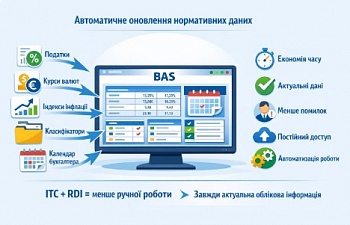
Update Automation: Downloading current currency rates and classifiers directly from the Internet.
-
Interactive Support: Direct connection to the technical support service directly from the program interface.
Intelligent Search: Full-text search by any text fragment across the entire database (documents, catalogs, comments).
Update Automation: Downloading current currency rates and classifiers directly from the Internet.
Interactive Support: Direct connection to the technical support service directly from the program interface.
Products BAS